JNTO CANADA NEWSLETTER - February 2026
Winter Wonderlands Across Japan
The landscape of Japan is always beautiful, but perhaps never more so than in winter. Pristine, snow-caked countryside blankets the warmth of Japanese winter cuisine as long-treasured traditions are joyously celebrated in festivals that unite locals and visitors alike.
Some of Japan’s most amazing
matsuri (festivals), rich traditions and even richer delicacies can only be experienced in the snowy offseason, particularly in the Tohoku region. Read on below for an exciting overview of can’t-miss carnivals on your next winter odyssey to Japan.
Akita
|
|
|---|
|
Kamihinokinai Paper Balloon Festival - Photo courtesy of JNTO |
|
|---|
|
|
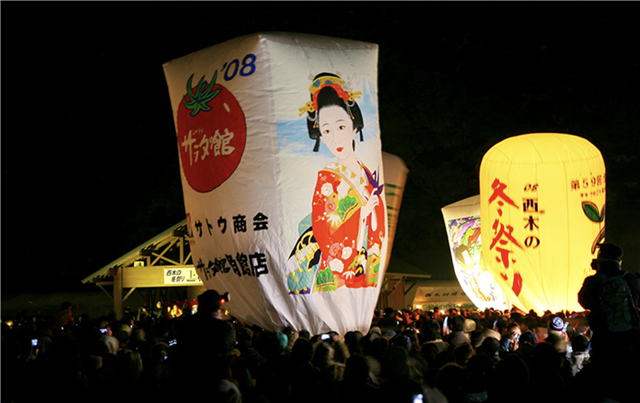
Walking through the fresh snow on a crisp day in Akita, visitors are invited to join the Paper Balloon Festival of Kamihinokinai (February 10, 2026) and make wishes come true by writing them on balloons! Hundreds of intricately painted balloons featuring samurai, women and woodblock prints are lit up and released into the night sky to float above the town with ethereal beauty.
Also on February 10, 2026, the Kariwano Tug of War Festival is held in Daisen City. This 500-year-old tradition is the largest tug of war event in Japan, and is purported to determine the fate of the upcoming rice harvest. Two ropes, 100 meters long and weighing 10 tons—one for males; one for females—are pulled by thousands of participants. Care to join in?
The Kakunodate Fire and Snow Festival (Hiburi Kamakura) from February 13-14, 2026, lights up the samurai district with bonfires and swinging fireballs! Originally a purification ritual to expel evil spirits and invite good fortune, it is now a social event in which dancers delight attendees with flaming bales of hay. The faster you swing, the stronger the flame, and the better the luck!
Next up is the Namahage Sedo Festival (February 13-15, 2026) in which ogres called
Namahage, Akita’s demon messengers of the gods, clad in masks and straw capes, carry torches and make their way through the crowd shouting, “Are there any naughty kids around?” It’s all in good fun, and amidst the beat of
taiko drums and the flames of the bonfire, the “naughty” children are scared straight!
Much like in some parts of Canada, igloos are a common sight in Akita. During the Yokote Kamakura Festival (February 15-16, 2026), both large and small igloos look like glowing orbs that magically light up the cityscape. These altars of snow are dedicated to the water deity. Miniature “kamakura” are candle-lit and evoke a mystical ambience, while larger huts offer visitors warm drinks. The cuisine is rooted in comfort food like Bear Stew;
Kiritampo, rice that is mashed, kneaded and stewed with meat and vegetables or glazed with a miso paste;
Hinai chicken, free-range and slow-raised to tender, juicy perfection and paired with creamy
Hinai chicken eggs and sweet sauce on rice. Children drink sweet
amazake and snack on grilled rice cakes.
Yamagata
|
|
|---|
|
Snow Monsters of Mount Moriyoshi Prefecture ©Akita |
|
|---|
|
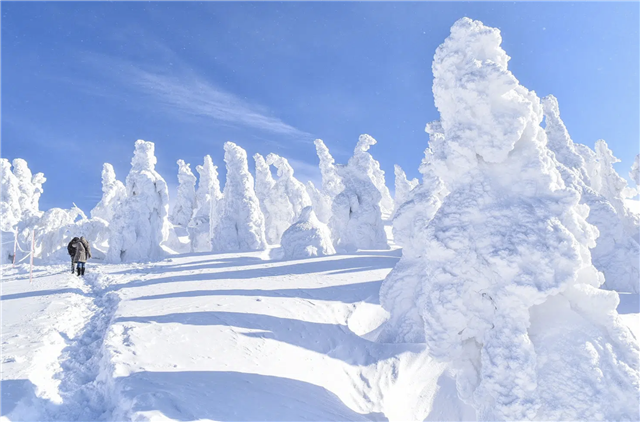
The Zao Snow Monster Festival (December 27, 2025 - February 23, 2026) features entirely natural snow sculptures. Massive snowfall completely cloaks the trees on the mountainside to form monstrous figures across the slope. At night, the famous Zao Onsen Ski Resort, the largest ski resort in Tohoku, monsters are illuminated for hiking and skiing experiences unlike any other! On Saturday nights, skiers and snowboarders glide down the mountain by torchlight under a banner of fireworks.
Niigata
|
|
|---|
|
Tokamachi Snow Festival -
Photo courtesy of JNTO |
|
|---|
|
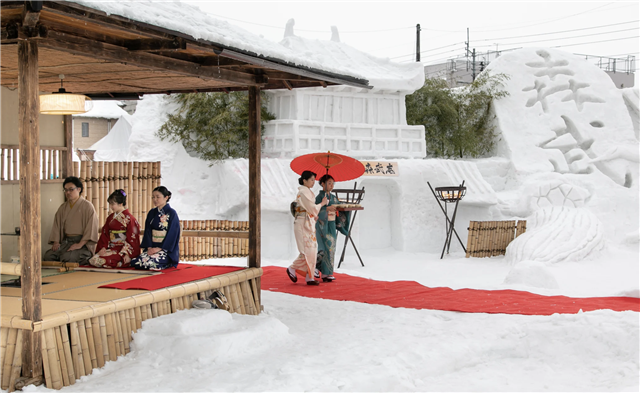
Just south of Tohoku in the Chubu region, Tokamachi is renowned for its charm. Not only is it home to some of the most beautiful kimono designs in Japan, but it is also the snowiest town on the main island of Honshu. The Tokamachi Snow Festival (February 20 – 22, 2026) celebrates winter’s wonder with magnificent ice sculptures, illuminated at night, and a kimono fashion show that is recognized by the Guinness Book of World Records as the largest ice stage in the world. As the 1,500-year history of traditional kimono continues, watch for the latest trends and cheer the crowning of this year’s kimono queen. This incredible snow carnival also includes live concerts, Japanese folk dancing and fireworks.
Bonus: Okinawa’s Winter Blossoms
|
|
|---|
|
Okinawa's Winter Blossoms - photo courtesy of JNTO |
|
|---|
|
Did you know that in Okinawa,
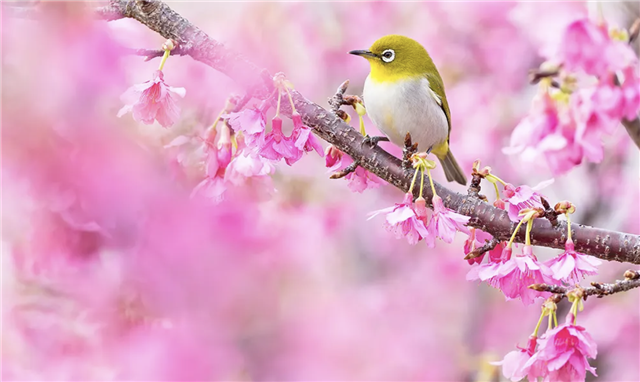
Cherry Blossom Season starts early? Okinawa inaugurates the cherry blossom viewing calendar in January, with full blooms between January and February. Avoid the masses of tourists during cherry blossom season by visiting this tropical island in the south of Japan, renowned for healthy longevity, in the peak of winter. Here, centenarians enjoy traditional lifestyles, ripe tropical fruits burst with juiciness, deep sea diving is second to none, seafood is always fresh, and white sandy beaches without the crowds and without the summer heat are perfectly calming and make for the ultimate relaxing getaway!
|
|
|---|
|
You can learn more about Japan at https://www.japan.travel/en/ca/.
|
|
|---|
|
|
|